
Kinetik
Operational release intelligence that turns software change into an evidence-backed review and decision.
Project file
Problem: Release review breaks down when risk findings, evidence, provenance, and the final decision live in separate tools or depend on memory.
Role: Product direction, systems architecture, governance, implementation, and review
Date: 2026
Tools: TypeScript, Next.js, Postgres, GitHub integration, Evidence records, Policy rules
Artifacts
Screenshots and visual proof.
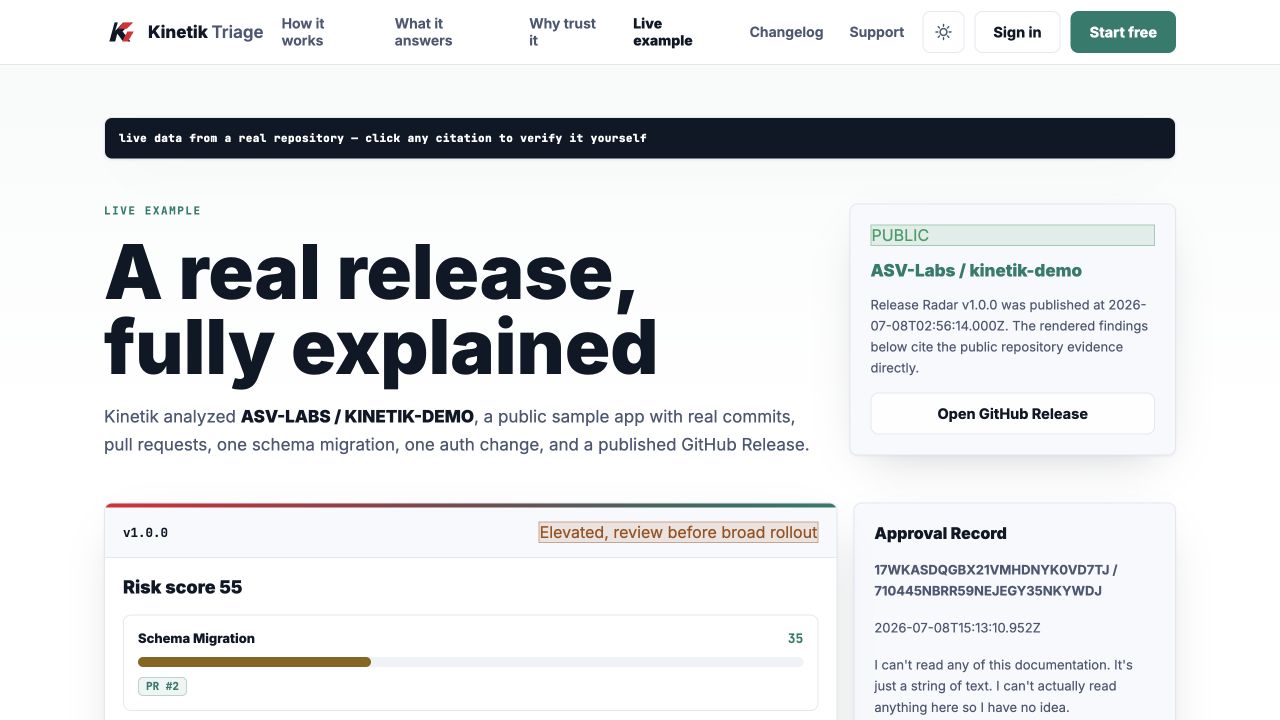
Receipts
Outcomes and lessons.
Outcomes
- Repository-backed evidence records
- Generated release notes tied to findings
- Sanitized review interface
Lessons
- Release claims should remain traceable to evidence.
Shipnote is treated only as historical foundation. Kinetik is the current system.