
Flavor by Design
A recipe and kitchen project with Italian roots, global flavors, searchable recipes, portion scaling, newsletter hooks, and a product/content pipeline.
Project file
Problem: Good recipes and family food knowledge are easy to lose. Flavor by Design gives them a durable, searchable, useful home.
Role: Founder, builder, content systems operator, product strategist
Date: 2026
Tools: Next.js, React, Prisma, Recipe data, Newsletter, Affiliate research pipeline
Artifacts
Screenshots and visual proof.
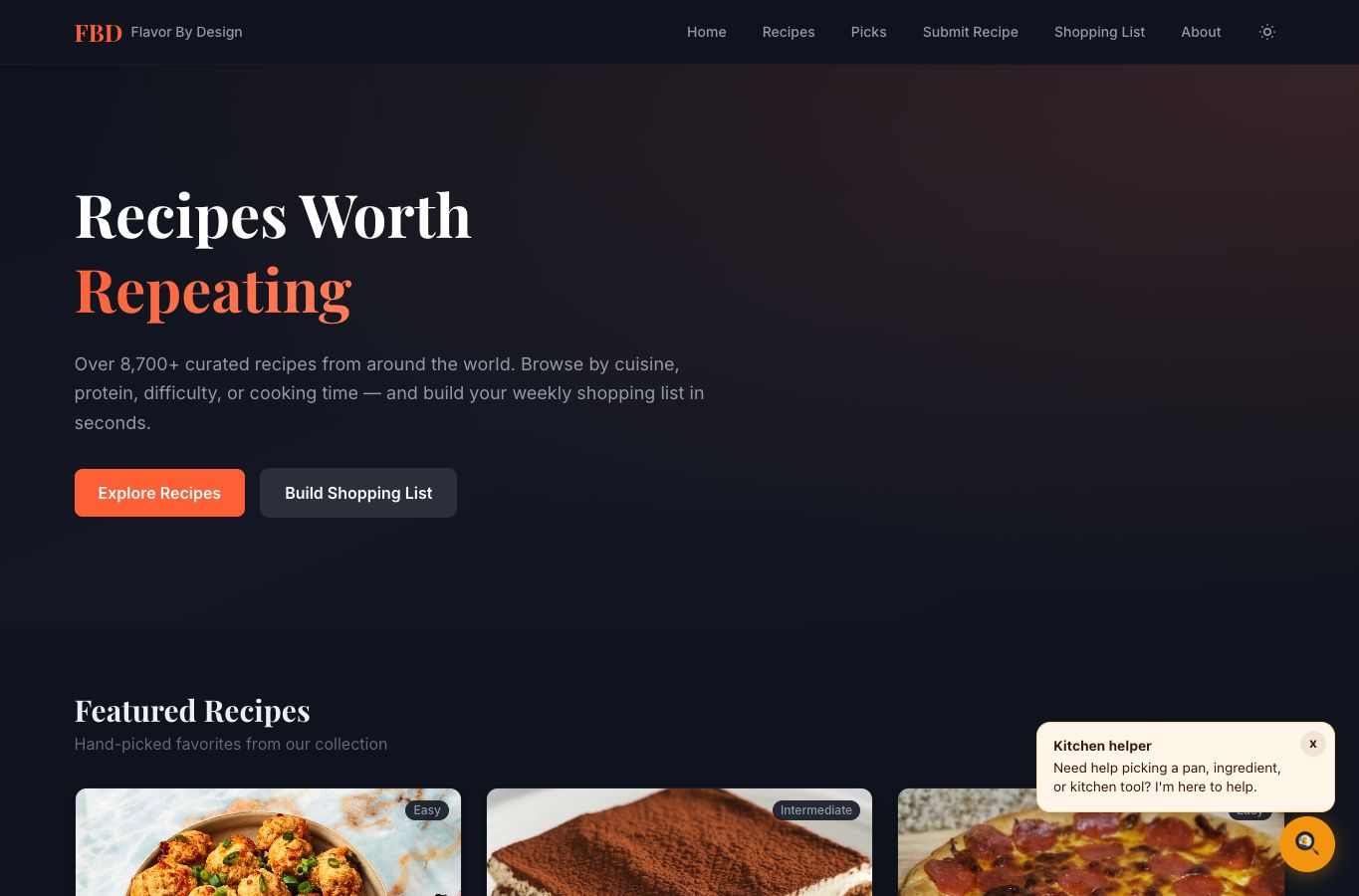
Receipts
Outcomes and lessons.
Outcomes
- Live public recipe surface at flavorbydesign.org.
- Public story ties the project to A Salty Vet and family kitchen roots.
- Product recommendations and affiliate research stay separated from recipe trust.
Lessons
- Food products need trust before monetization.
- Product research belongs in review tools until public copy is cleared.
Flavor by Design adds a different kind of proof: not just code, but taste, voice, content architecture, search, recipe usability, and long-term brand stewardship.
This portfolio should talk about the project as a living product and content system. It should not expose internal affiliate scoring, raw research artifacts, or unreviewed product recommendations.