
Foundry Kit
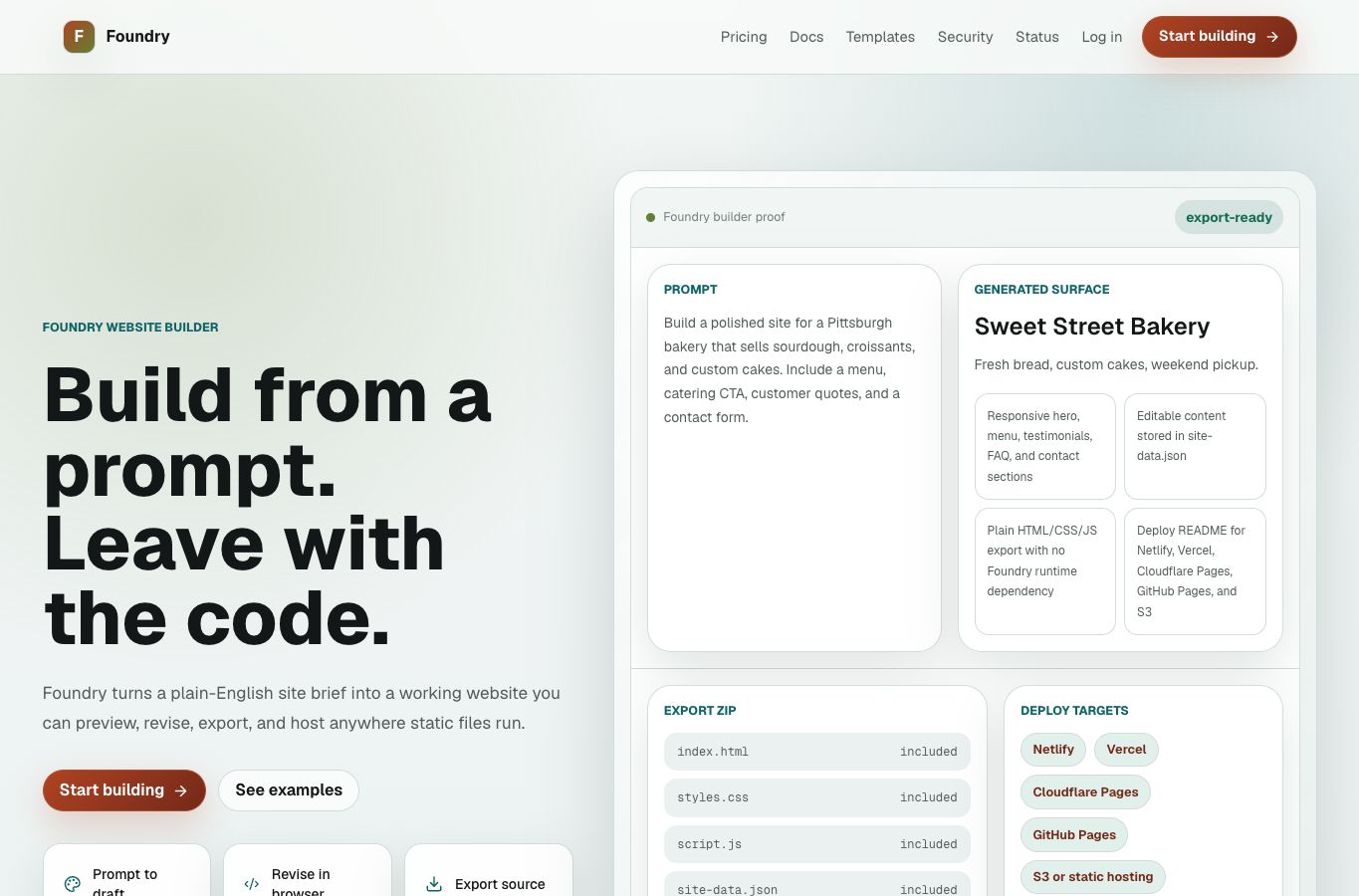
A website builder that turns a plain-English brief into exportable website source code, with pricing, docs, templates, status, and security surfaces.
Project file
Problem: Small businesses and solo operators need websites they can actually own. Foundry Kit focuses on producing portable source, not trapping users inside a black-box builder.
Role: Founder, product strategist, systems designer, frontend engineer
Date: 2026
Tools: Next.js, React, Auth, Postgres, AI SDK, Cloudflare, Stripe-ready architecture
Artifacts
Screenshots and visual proof.
Receipts
Outcomes and lessons.
Outcomes
- Live public site with builder, pricing, docs, security, status, and example surfaces.
- Public copy centers on portable source export and static hosting readiness.
- Private implementation details remain summarized, not exposed.
Lessons
- The honest offer is narrow: generate a useful site and leave with the code.
- Do not overbuild platform adapters before the core export promise is proven.
Foundry Kit is the portfolio’s product-building proof for a founder/developer lane: positioning, trust surfaces, export logic, security posture, pricing model, and deployment thinking all in one product.
The public proof should stay focused on the source-export promise. Private details such as provider costs, internal prompts, user records, and unfinished adapters should not appear on this portfolio unless they are intentionally cleared later.